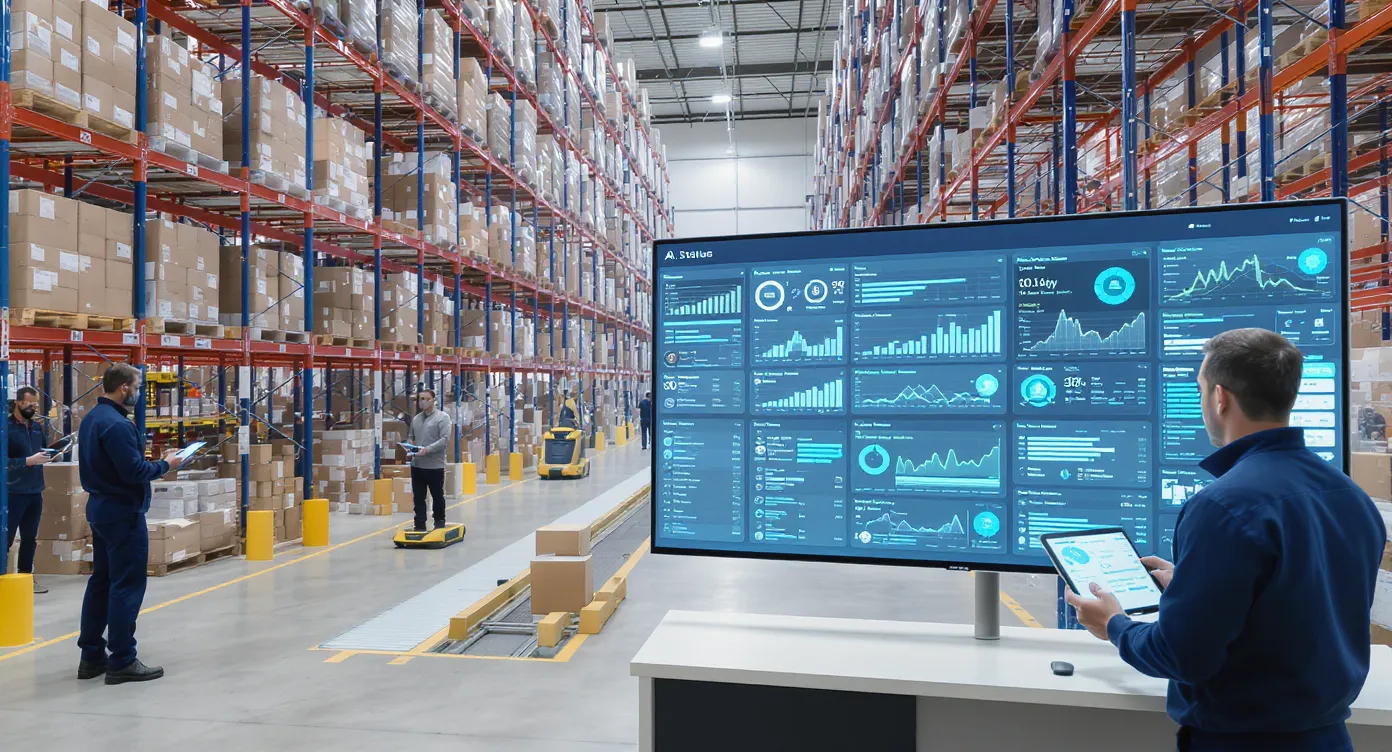
AI benefits for wholesale and distribution
Dec 7, 2025
Wholesalers and distributors operate on thin margins, high volumes, and with increasingly demanding customers. That makes consistent fulfillment, fast quoting, and tight inventory control critical. Used well, AI delivers concrete benefits here, from fewer stockouts to faster quotes and lower operating costs. In this article, we explain which AI benefits are directly relevant to wholesale and distribution, where to start, and how to achieve tangible results within 90 days.
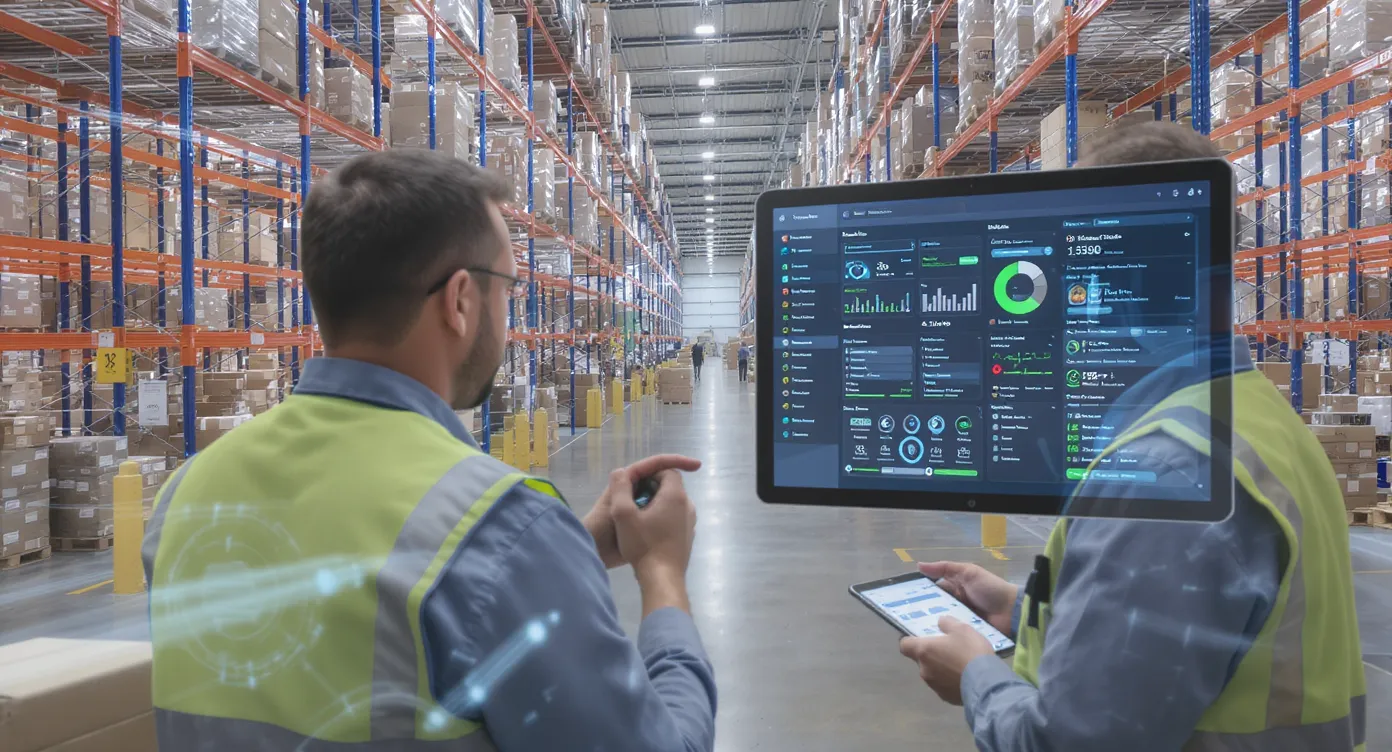
Why AI adds value right now
Demand has become more volatile, labor shortages persist, and price pressure is increasing. At the same time, most wholesalers already have enough data in their ERP, WMS, and CRM to work smarter, but that data often goes underused. AI can detect patterns in orders, returns, seasonality, and price elasticity, then translate them into actions that create immediate value. Where traditional automation mainly executes fixed rules, AI can also process unstructured information like emails, PDF quotes, and free-text notes.
If you want a broader view of AI in process improvement, also read our comparison of AI versus manual work and our explanation of workflow automation with AI.
The most important AI benefits by process
1) Smarter demand forecasting and purchasing planning
An AI model can combine sales history, seasonal effects, promotions, lead times, and external signals into a more accurate forecast. For wholesale and distribution, this means fewer stockouts, lower safety stock, shorter cash-to-cash cycles, and a higher service level. AI can also prioritize purchasing recommendations based on margin and supply risk, helping planners make better decisions faster.
What you notice in practice: fewer urgent orders, less obsolete stock, and higher delivery reliability without adding extra buffer.
2) Faster and better quoting, pricing, and margin control
AI can draft quotes, enrich them with product specifications, validate volume discounts, and automate follow-ups. At the same time, it can predict the likelihood of winning a deal and advise on the optimal price within your margin targets. For distributors that handle a high volume of quotes, this can cut days from cycle time and improve consistency in pricing and discount policy.
Result: higher win rates, shorter quote-to-order time, and more stable margins in volume agreements.
3) More efficient inventory and warehouse operations
AI improves slotting, pick routes, and task allocation by continuously learning from order profiles and travel paths. It detects exceptions like unusual consumption patterns or shrinkage and flags them early. Combined with your WMS, this can reduce pick times, lower error rates, and improve utilization of people and equipment.
Practical effect: more orders per hour per picker and fewer corrections afterward.
4) Service and aftersales without waiting
With AI-powered assistants, you can answer common questions 24/7 about stock availability, lead times, reorders, and returns via email, WhatsApp, or chat. Complex questions can be escalated cleanly with full context so employees can resolve them faster. This increases customer satisfaction and reduces tickets that do not need human time.
5) Sales and marketing at scale
AI personalizes outreach, drafts email sequences, enriches company data, and scores leads based on buying intent. For regionally operating wholesalers and B2B suppliers, this is a way to create consistent pipeline without expanding the team. For more on tooling, see our guide to 5 must-have AI tools.
6) Data quality, EDI, and invoice matching
AI can identify item variants, duplicate master data, and inconsistencies across customer or supplier files. It matches purchase orders, delivery notes, and invoices, even when descriptions differ. This prevents credit notes, speeds up processing, and reduces manual corrections. If you work with GS1 codes, AI can also help enforce GS1 standards consistently across your chain.
7) Delivery risk and supply chain visibility
AI can spot anomalies in lead times, quality issues, and supplier communications and provide early warnings. That allows you to plan alternatives, proactively inform customers, and prevent penalties or lost revenue.
Example calculation: how AI pays for itself quickly
Imagine you process 1,000 orders per week. With AI automation, you save an average of 2 minutes of manual work per order, for example through automated order validation, pick prioritization, and status updates. That is 2,000 minutes per week, around 33 hours. At a fully loaded cost of €40 per hour, you save more than €1,300 per week. This does not yet include the impact of fewer errors, fewer rush shipments, and higher margins through better pricing. Add one extra deal per month thanks to faster and sharper quotes, and your payback period often shrinks to weeks instead of months.
This aligns with our earlier analysis that AI executes repetitive tasks structurally faster and more consistently than people. Read the rationale in AI versus manual work.
A practical 90-day plan for wholesale and distribution
Define a focused use case. Choose 2 to 3 processes with high volume and clear pain, for example quoting, order processing, or forecast-to-purchase. Capture current baseline metrics such as lead time, error rates, and manual touches per order.
Prepare data for use. Connect ERP, WMS, and CRM, harmonize fields, and remove duplicates. Start with the top 500 items and top 100 customers to build momentum. Work with clear definitions for product families, UOM, and lead times.
Run a pilot with humans in the loop. Automate part of the process, such as generating quotes or proposing purchase orders. Have employees validate and feed corrections back into the model. Measure weekly on the same KPIs.
Establish governance and compliance. Maintain versions of prompts and workflows, logging, access control, and escalation paths. Account for GDPR principles such as data minimization and a lawful basis. Also see the guidance from the Dutch Data Protection Authority (Autoriteit Persoonsgegevens) on processing personal data.
Scale in phases. Once the pilot is stable, increase volume, expand to additional product groups, and automate approved steps end-to-end. Plan monthly optimizations based on measured results.
For a look ahead at what is coming in technology and opportunities, also read the future of AI automation.
Integrations without headaches
Value only appears when AI works frictionlessly with your systems. In practice, that means integrations with CRM and ERP, WMS and TMS, email and WhatsApp, Slack and accounting, or any other API. What matters is that data is consistent, that ownership of data fields is clear, and that you keep logs for audits. Choose an integration approach that delivers value quickly, for example starting with read-only, then writing with validation, and finally full automation for simple cases.
Compliance and supply chain standards
Privacy and GDPR: limit sensitive data, pseudonymize where possible, and define retention periods. Document data flows and record lawful bases for processing.
Transparency: make it clear which steps are done by AI and when human oversight is required. This increases trust among employees and customers.
Supply chain standards: use GS1 for item and location codes and communicate consistently in EDI messages. This reduces interpretation errors and speeds up posting and matching.
Common pitfalls and how to avoid them
Trying to do everything at once. Start small with one clear use case, prove value, then scale.
Automating exceptions. Build for the standard flow first, route deviations to an employee with context.
Insufficient data quality. Define data fields, make ownership explicit, and perform periodic cleanups.
No clear KPIs. Without a baseline and clear targets, success is hard to prove.
Too little change management. Train teams, communicate early, and explain how AI makes their work easier.
KPIs that matter in wholesale and distribution
Service level and backorders: how often you deliver in full and on time, and how many orders go to backorder.
Inventory parameters: days of inventory, inventory turns, and percentage of obsolete stock.
Operational lead time: from order intake to shipment, including the number of manual touches per order.
Warehouse productivity: picks per hour per employee and picking error rate.
Commercial performance: quote-to-order conversion, average quote cycle time, margin per deal.
Customer experience: first response time, resolution time, and NPS or CSAT.
Financial processing: time to invoice, match rate, and number of credit notes.
Pick a maximum of five KPIs for your first 90 days and report weekly. This ensures you manage based on evidence rather than assumptions.
How B2B Groeimachine builds your AI advantage
B2B Groeimachine focuses on AI-driven sales and operations automation for growing companies. We help wholesalers, distributors, and B2B suppliers quote faster, process orders more intelligently, and scale marketing and service.
What you can expect from us, tailored to your processes:
Sales workflow automation: automatic follow-ups, outreach, CRM updates, quotes, and pipeline support.
AI assistant for daily tasks: a digital colleague for administration, planning, reporting, and research.
Sales and marketing automation: campaigns, email sequences, lead nurturing, content creation, and customer engagement.
Lead generation: multichannel prospecting, data enrichment, and AI lead scoring.
Custom AI projects: agents and automations that fit your workflows and systems.
Integrations: connections to CRM, ERP, email, WhatsApp, Slack, accounting, or any other API in your stack.
Continuous optimization: performance monitoring and ongoing improvement of your automations.
24/7 AI support: an assistant that answers questions, executes tasks, and helps your team at any time.
Data-driven insights: automated reports and dashboards for faster decisions.
Cost-driven automation: less manual work, fewer errors, and lower operating costs.
The outcomes for our clients are consistent: more high-quality leads, shorter sales cycles, less repetitive work, lower costs, smoother operations, and systems that scale as you grow.
Want to see concretely where the biggest AI benefits are in your operation? Start with one clearly scoped process and a short pilot. We are happy to think along on a roadmap that fits your ERP, WMS, and commercial goals. Get in touch to prioritize your first use cases and achieve measurable results within 90 days.
Frequently Asked Questions
What are the best AI use cases to start with in wholesale and distribution? Start with high-volume processes where impact is easy to measure, such as quote creation and follow-up, order validation and status updates, and demand forecasting feeding into purchasing.
Do you need perfectly clean data before using AI? No, but you do need clear definitions and ownership. A practical approach is to begin with your top items and customers, fix duplicates and inconsistencies, and improve data quality as you scale.
How fast can AI deliver measurable results in distribution operations? Many teams see measurable improvements within 60 to 90 days when they focus on one or two use cases, establish baseline KPIs, and run a pilot with human validation.
How does AI help with EDI and invoice matching? AI can match POs, delivery notes, and invoices even when descriptions differ, flag mismatches early, and reduce manual corrections. When combined with consistent standards like GS1, this typically improves throughput and reduces credit notes.
What about GDPR compliance when using AI assistants? Use data minimization, access controls, logging, and clear retention periods. Avoid unnecessary personal data, and document your lawful basis for processing in line with GDPR principles and guidance from your regulator.