
AI check: how to assess quality and risk
Nov 27, 2025
More and more SMBs rely on generative AI and smart automation to grow faster. But rushed adoption often causes headaches: hallucinating chatbots, hidden bias in lead scoring, and systems that leak sensitive data. A thorough AI check helps you avoid these pitfalls and ensures your AI solution truly adds value without unnecessary risk. In this article, you will learn how to assess the quality and risks of any AI application step by step.
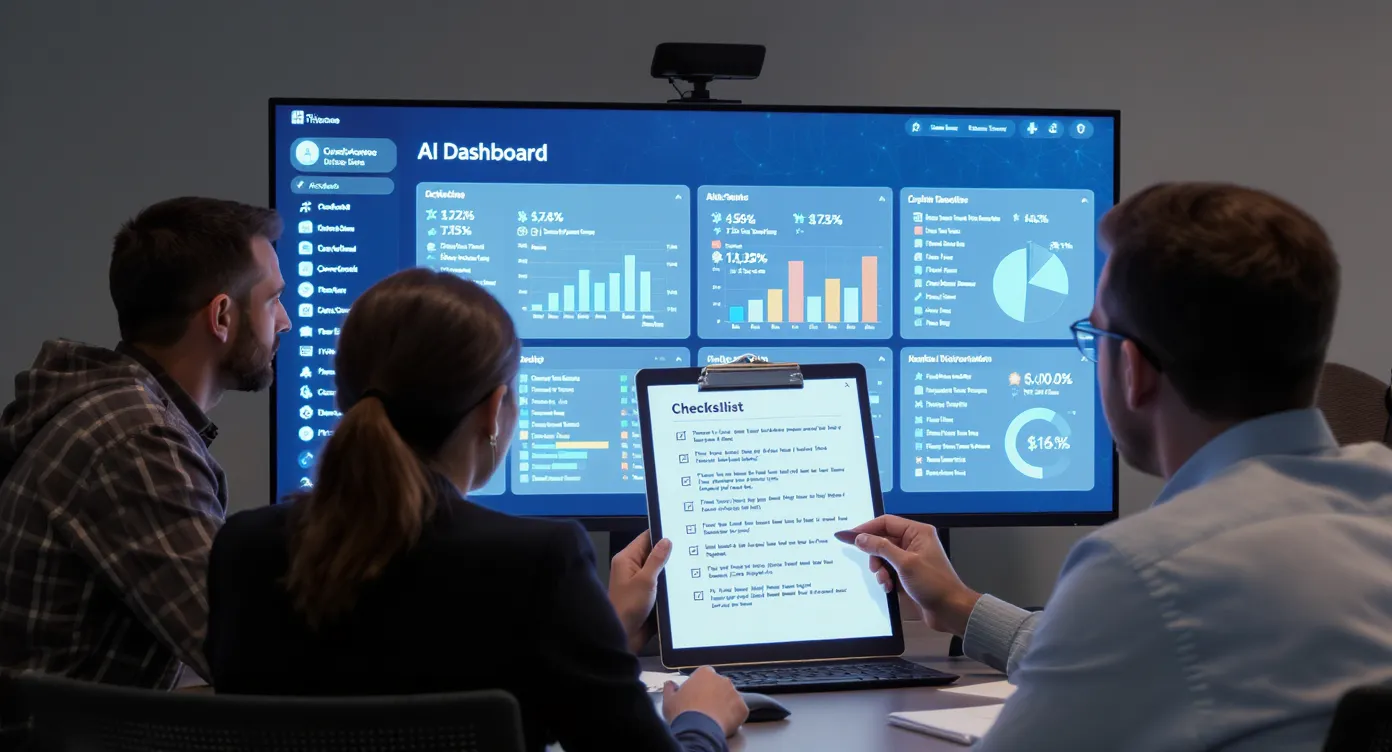
Why an AI check is essential
Ensures your model delivers reliable output and protects your brand reputation.
Detects privacy and security gaps early, before regulators or customers do.
Prepares you for stricter regulation such as the EU AI Act and the NIS2 Directive.
Saves costs by identifying issues before go live, instead of expensive rebuilds afterward.
For wholesalers, installers, and accounting firms (organizations that often work with sensitive customer or inventory data), this kind of review is especially critical.
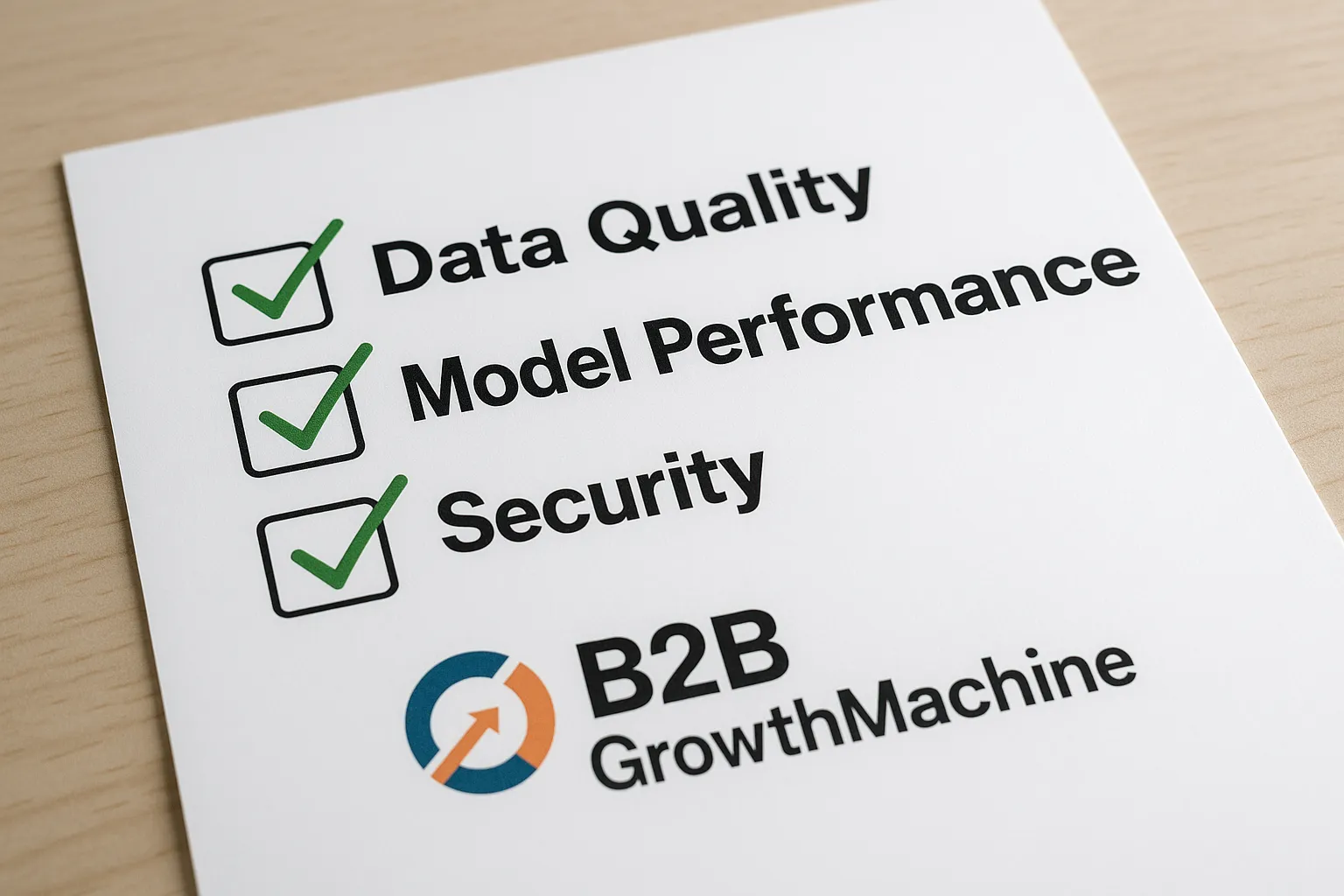
The three pillars of an AI check
1. Data quality
Representativeness: does your training set include all relevant customer segments?
Correctness: how many errors, duplicates, or missing values exist in the source data?
Bias detection: are certain regions, genders, or industries underrepresented, which can lead to biased predictions?
Practical tip: use open source tools like Great Expectations or Soda Core to automatically run data tests on every pipeline run.
2. Model performance
Look beyond classic metrics like accuracy and precision. Also measure:
Business KPIs: does the lead scoring model actually generate more revenue per sales rep?
Robustness: does performance remain stable during seasonal peaks or under data drift?
Explainability: can sales teams understand why a lead is assigned high priority?
Evidently AI or Google’s open source Model Card template can help document these dimensions transparently.
3. Operational risks
Security: does the workflow encrypt sensitive company and customer data end to end?
Compliance: does the use of personal data comply with GDPR and, soon, the EU AI Act?
Continuity: is there a fallback mechanism when the model is unavailable or produces unexpected results?
Step by step plan for an effective AI check
Define the goal and risks. Document which business processes are affected and what damage you absolutely want to prevent.
Involve stakeholders. Combine expertise from IT, legal, security, and the process owner (for example sales or finance).
Run a quick scan. In one day, assess scope, data flows, and the first compliance gaps. This sets direction for the deep dive.
Deep analysis. Test data quality, model performance, and security against pre defined acceptance criteria.
Penetration test and privacy audit. Simulate attacks on APIs, storage, and prompts to uncover leaks and jailbreaks.
Go no go decision. Enforce rules such as “no sensitive data in prompts” or “model must achieve 95% accuracy.”
Continuous monitoring. Automate retraining, data drift detection, and periodic bias scans so risks do not creep back in.
Case study: bias in lead scoring at a wholesaler
A distributor of HVAC parts implemented AI driven lead scoring to help field sales teams prioritize accounts. During an AI check, the model was found to systematically score female buyers lower because the historical data mostly contained male contacts. By adding additional training data and introducing a fairness constraint, conversion increased by 12% while the bias risk was mitigated.
Tools and frameworks that speed up the work
Great Expectations for data validation throughout the pipeline.
Evidently AI for continuous monitoring of model performance and data drift.
IBM AI Fairness 360 or Microsoft Responsible AI Dashboard to detect discrimination.
NIST AI Risk Management Framework and ISO/IEC 42001 as governance foundations.
Many of these tools are open source and integrate easily into CI/CD flows, something automation platforms like B2B GrowthMachine can benefit from.
What the EU AI Act means for your AI check
The upcoming European AI regulation classifies applications into three main categories: unacceptable risk, high risk, and limited risk. Lead scoring in B2B sales will likely fall under “limited risk,” while AI that determines credit limits can quickly become “high risk.” An AI check documents the risk class, proves you are applying the right mitigations, and helps prevent fines of up to 6% of annual global turnover.
How B2B GrowthMachine helps
B2B GrowthMachine includes AI quality and risk management by default:
Automatic prompt validation and logging to help prevent data leaks.
A sandbox for testing new AI agents without exposing production data.
Ready made monitoring flows aligned with ISO and NIST guidelines.
A 24/7 AI assistant that alerts you to data drift or performance drops.
This way, you can run a basic AI check in minutes and stay compliant as you scale. Read our earlier article “How AI Workflow Automation Transforms Businesses” for a broader perspective on automation, or compare the savings in “AI versus manual work.”
Frequently asked questions
What is the difference between an AI check and a traditional IT audit? An AI check focuses specifically on data quality, model performance, and ethical risks, while a standard IT audit primarily evaluates processes, infrastructure, and security.
How often should I run an AI check? At least quarterly, or whenever you add new data, features, or markets. For high risk models, the EU AI Act may require real time monitoring.
Do I need specialized data scientists for this? Not always. With ready made checklists and tools like Evidently AI, a tech savvy IT professional can run many tests. Complex models do require expertise.
What does an AI check typically cost? A quick scan often starts around €2,000. In depth audits range from €10,000 to €30,000 depending on scope and risk.
How do I prepare for the EU AI Act? Map your AI applications, determine the risk class, document controls, and keep a logbook of all model measurements.
Ready for a quick AI check?
Want to be sure your AI workflow runs reliably and remains compliant? Request B2B GrowthMachine’s free Quick Scan today and discover within one week where your opportunities and risks are. More control over quality, fewer worries about fines, that is the power of a smart AI check.